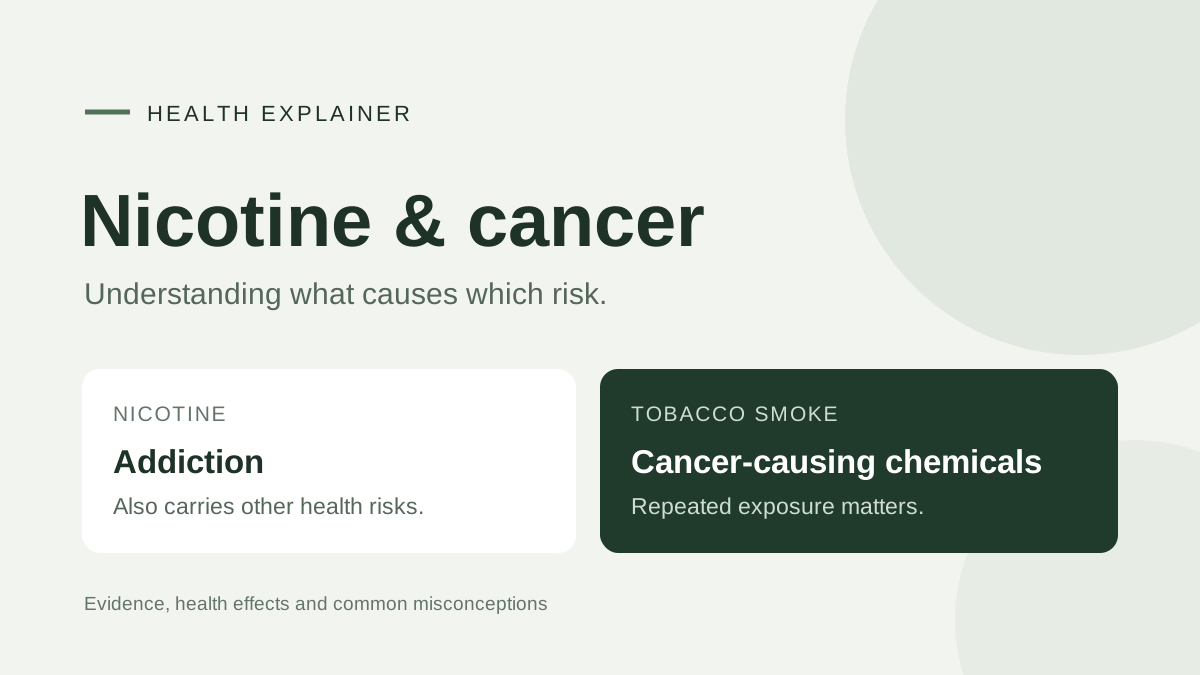
Nicotine is often used as a shorthand for everything harmful in cigarettes. That confuses the substance that drives addiction with the substances responsible for smoking-related cancer. Their roles differ, but repeated smoking connects them.
Is nicotine the main cause of smoking-related cancer?
Cancer Research UK explains that nicotine makes cigarettes addictive, while nicotine itself does not cause cancer. Describing nicotine as the main carcinogen in cigarettes is therefore inaccurate. This statement does not certify every nicotine-containing product as safe.
What in cigarette smoke causes cancer?
The US National Cancer Institute, or NCI, reports that tobacco smoke contains more than 7,000 chemicals, including at least 69 that can cause cancer. Examples include benzene, formaldehyde, tobacco-specific nitrosamines and polycyclic aromatic hydrocarbons.
Assessing harm requires looking at the whole exposure, its amount and duration—not just a nicotine number on a label.
Why is “nicotine has nothing to do with cancer” misleading?
The FDA distinguishes the roles: nicotine sustains dependence and makes stopping difficult, while the toxic mixture in tobacco and smoke causes serious disease.
Dependence can keep someone smoking for years, repeatedly exposing them to carcinogens. Nicotine is not the main direct cause of smoking-related cancer, but addiction has an important indirect role.
What other risks does nicotine have?
Cancer is only one part of safety. The CDC identifies nicotine addiction, harm to developing brains and fetuses, and poisoning from acute exposure.
NIOSH describes increases in heart rate and blood pressure. Severity depends on dose and exposure route. Swallowing nicotine liquid or exposure to concentrated nicotine requires prompt medical advice.
Why do some stop-smoking medicines contain nicotine?
The FDA’s cessation guidance explains that nicotine replacement therapy, or NRT, reduces cravings and withdrawal without delivering the toxic mixture in cigarette smoke. Patches, gum and other approved medicines are intended to support quitting when used as directed.
Evidence for assessed medicines cannot certify all nicotine products. People who are pregnant, breastfeeding or have medical conditions should discuss suitable options with a health professional.
Does low nicotine or no combustion mean no risk?
No. The NCI reports that low-nicotine or low-tar cigarettes do not lower lung-cancer risk. A different label is not a reason to continue smoking confidently.
Absence of combustion also does not establish safety. The NCI identifies increased cancer risks from smokeless tobacco, including chewing tobacco. The FDA explains that e-cigarette aerosol can contain harmful chemicals. Nicotine’s risk profile alone cannot describe an entire product.
What can readers do with this information?
For people who smoke, the health priority is stopping cigarettes completely. A clinician or pharmacist can discuss counselling and appropriate stop-smoking medicines. People who do not already use tobacco or nicotine should avoid starting.
This is general health information, not individual medical advice. Sources checked on 9 September 2026.
---
For adult smokers who choose to switch completely, understanding how to compare devices helps you decide. Read our guide to comparing disposable vapes or browse the full product catalog.
Recommended Product
TMEBT 25K Disposable Pod — ฿450
Published and updated September 9, 2026