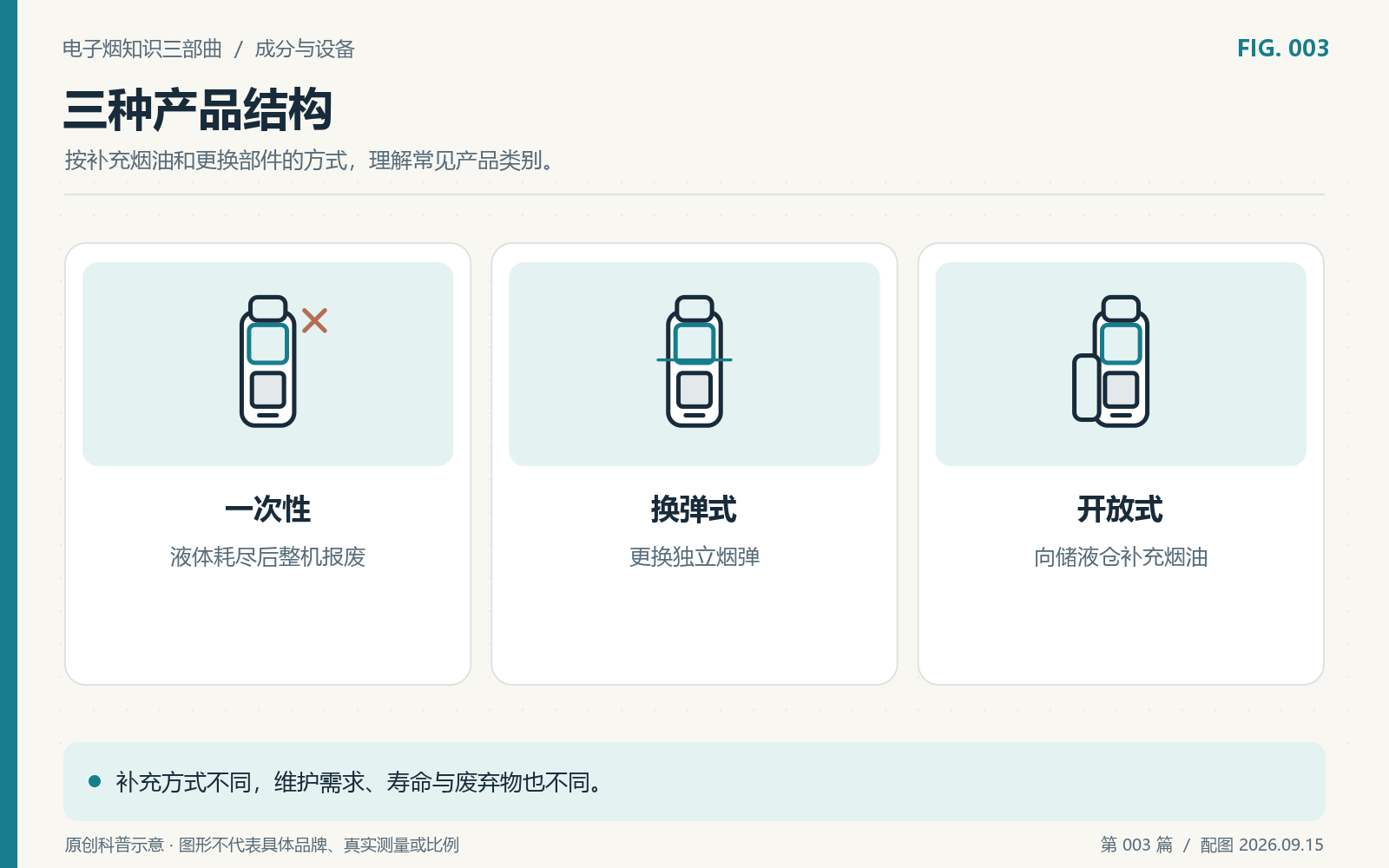
*Comparing the structural features of disposable, pod, and open-system devices.*
These names mainly describe how consumables are refilled and reused. A pod system typically keeps the device and swaps in a pre-filled pod, an open system is designed to let you refill liquid, and a disposable is usually discarded as a whole once its consumables run out. But market terms are not always consistent, and the law may define “disposable” differently.
Being rechargeable does not necessarily mean reusable. Some devices can top up battery power yet cannot refill liquid or replace consumables by design. To judge the structure, check the battery, the liquid reservoir, and the coil separately — do not treat “has a charging port” as the only standard. The UK’s single-use vape rules, for instance, must be read together with specific conditions on rechargeability and refillability. UK classification guidance
When reading a product description, build a three-question checklist: Is the battery rechargeable by design, is the liquid refillable by design, and is the heating element replaceable by design? Those three answers say more about the structure than labels like “new” or “eco-friendly”. We stress “by design” because prying a device open to pour in liquid is not the same as the manufacturer designing it to be refillable. “Reusable” under regulations also usually has to meet specific conditions.
The practical value of classification is a clear lifecycle: which parts keep working, which parts become waste, and where maintenance responsibility falls. It also determines how test samples should be combined. Calling a device open-system does not replace material compatibility testing, and calling a closed system “maintenance-free” does not excuse ignoring damage, leakage, or battery faults.
Recommended Product
VPLUS 16k Disposable Pod — ฿450
Published and updated October 9, 2026